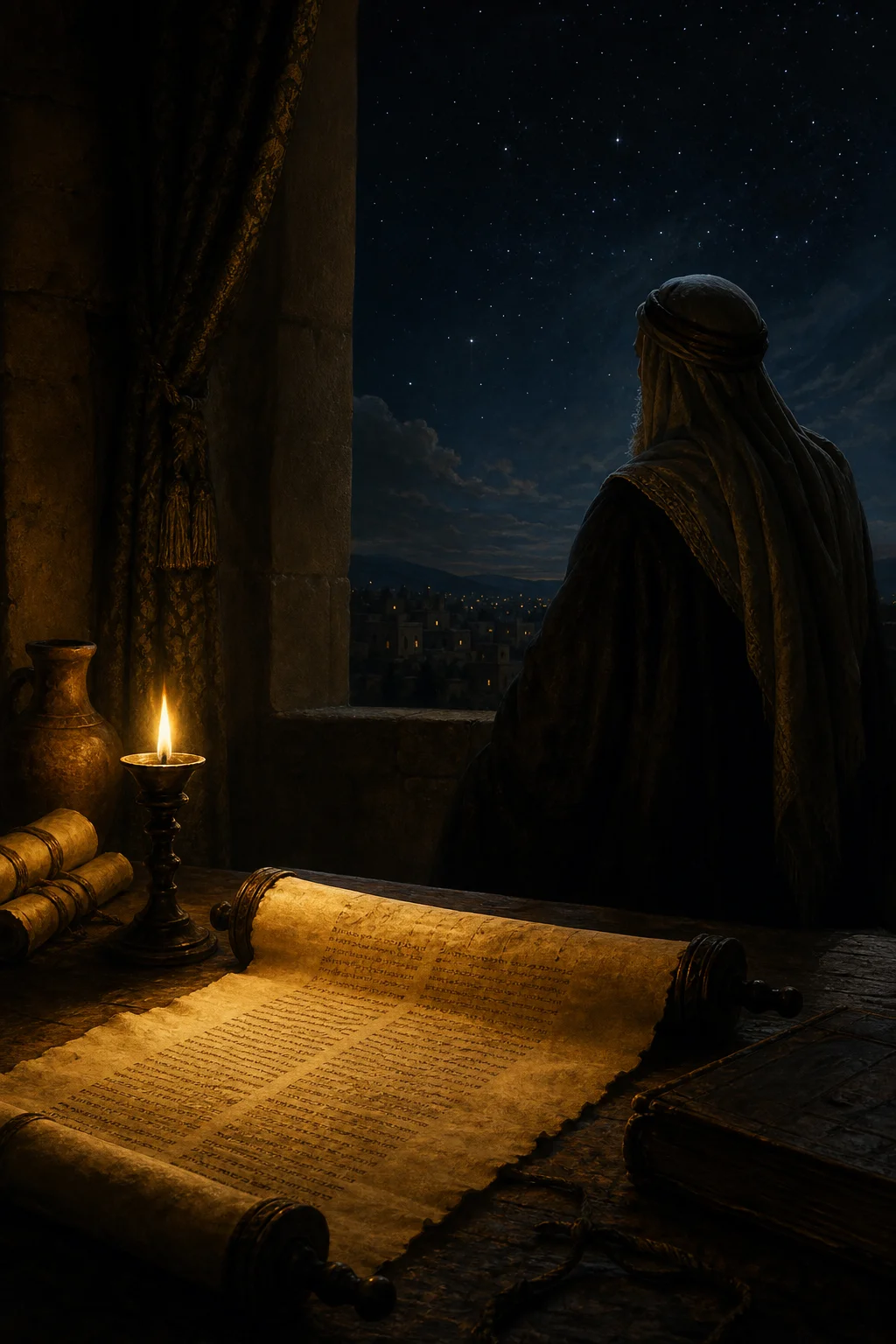
Opening Verse: Jesus answered and said unto him, Verily, verily, I say unto thee, Except a man be born again, he cannot see the kingdom of God. John 3:3, KJV. The conversation between Jesus and Nicodemus is one of the most theologically rich passages in all of Scripture. Nicodemus was a ruler of the Jews, a teacher of Israel, and a man of great religious learning. Yet he came to Jesus by night, drawn by the signs he had seen but still walking in spiritual darkness. Jesus cut straight to the heart of the matter. No amount of theological knowledge, moral effort, or religious devotion could qualify Nicodemus for the kingdom of God. He needed something he could never produce himself: a new birth. Jesus said, That which is born of the flesh is flesh; and that which is born of the Spirit is spirit. Marvel not that I said unto thee, Ye must be born again. The wind bloweth where it listeth, and thou hearest the sound thereof, but canst not tell whence it cometh, and whither it goeth: so is every one that is born of the Spirit. John 3:6-8, KJV.
Exposition: Nicodemus represents every person who trusts in religious pedigree, moral performance, or intellectual understanding to stand before God. He was shocked by Jesus' words. How can a man be born when he is old? Can he enter the second time into his mother's womb, and be born? His confusion reveals a fundamental truth: the new birth is so foreign to human nature that it cannot be imagined, let alone accomplished, by the unregenerate mind. Jesus pressed further. Are you the teacher of Israel, and you do not understand these things? Jesus expected Nicodemus to know the prophecy of Ezekiel 36, where God promised to sprinkle clean water, give a new heart, and put a new spirit within His people. This was not a new idea; it was an Old Testament promise that Nicodemus should have recognized. The new birth is not a Baptist invention, nor a modern evangelical emphasis. It is the covenantal work of God promised from ages past.
Theological Insight: The Reformed tradition calls this regeneration, and it is emphatically monergistic, meaning God alone works it. Man does not cooperate in his own new birth any more than he cooperated in his first birth. Just as an infant contributes nothing to his own physical birth, so the sinner contributes nothing to his spiritual birth. The new birth is an act of sovereign grace, not a response to human will. This is why Jesus compared it to the wind. The Spirit moves where He pleases, regenerating whom He wills, according to the counsel of His own will. We do not control the wind, and we do not control the Spirit. The doctrine of election shines brightly here. Why are some born again and others not? Jesus gives no human explanation. The Spirit breathes where He wills. The new birth is the result of God's electing love, not the cause of it. The Father chose His people in Christ before the foundation of the world, and the Spirit applies that choice in time by giving the new birth. Grace precedes faith. Regeneration precedes repentance and belief. We love Him because He first loved us.
Application: First, have you recognized that your religious background, good works, or sincere efforts cannot save you? Have you come to the place where you see yourself as utterly dependent on the Spirit to give you what you cannot give yourself? Second, do you understand that your salvation began in the heart of God before you ever existed, and that the new birth is His work from first to last? Third, does this truth produce humility in you, or do you still find yourself trusting in something you have done, felt, or decided?
Prayer Prompt: Heavenly Father, I confess that I am helpless to save myself. I cannot birth myself into Your kingdom. If I am born again, it is because Your Spirit moved upon me in sovereign grace, not because I was wiser, better, or more seeking than others. Thank You for choosing me in Christ before the world began. Make me grateful, humble, and wholly dependent upon You. In Jesus' name, Amen.