Introduction
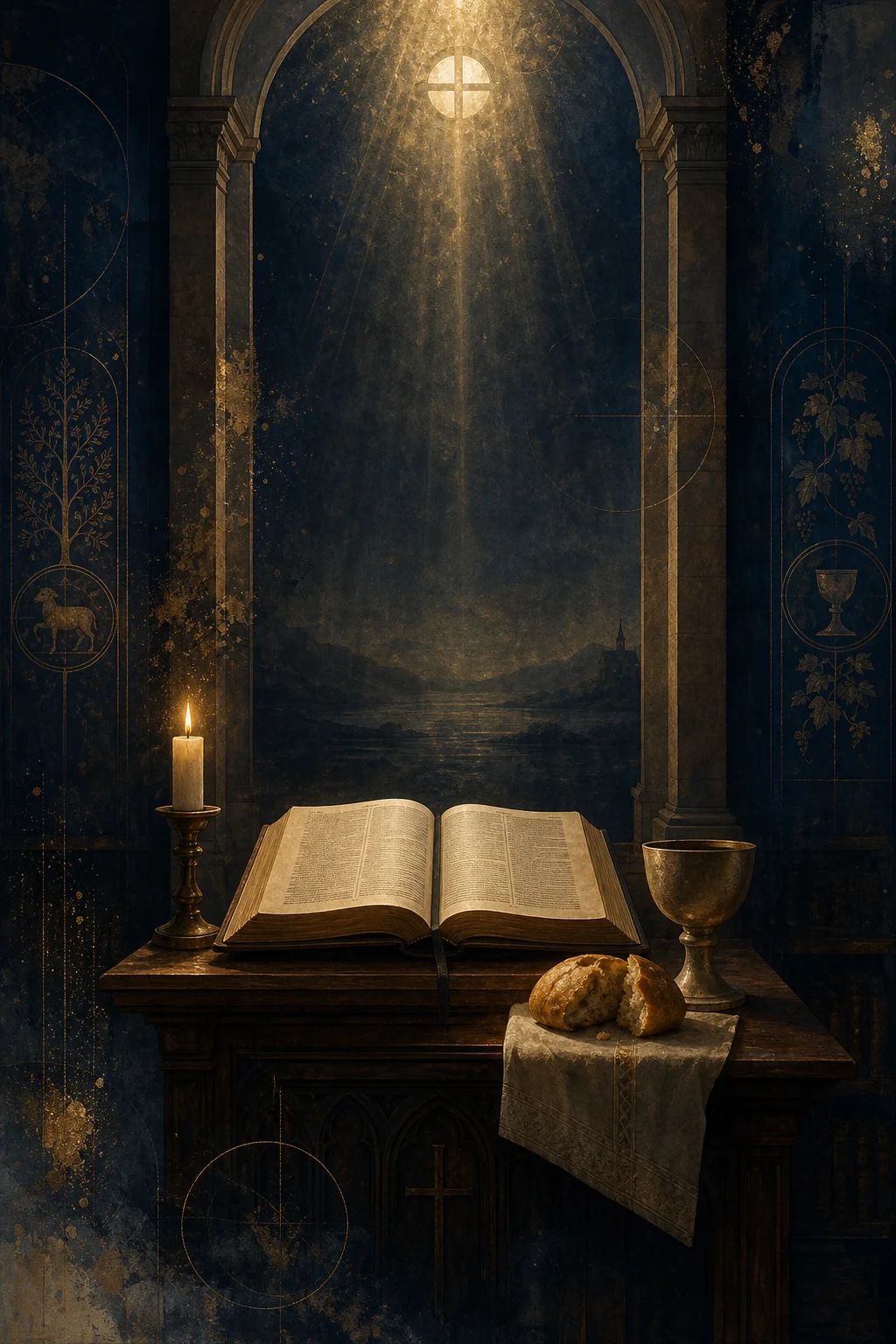
How does a Christian grow? The answer the Reformed tradition has given for centuries is both simple and profound: through the means of grace. These are the ordinary channels God has appointed for conveying His grace to His people. They are not magical rites. They are not human inventions. They are the Word, the sacraments, and prayer. Through these means, the Holy Spirit works in us what we cannot work in ourselves. He convicts, He illuminates, He transforms, and He sustains.
In an age of spiritual fads, quick fixes, and celebrity pastors promising breakthroughs, the means of grace seem almost boring. But it is precisely their ordinariness that makes them so powerful. God does not need spectacular methods. He has chosen the foolish things of the world to confound the wise. A preacher opening a Bible, a congregation receiving bread and wine, a saint on his knees in the dark of night, these are the mighty weapons of the Spirit. Do not despise the day of small things.
Biblical Foundation
The centrality of the Word is established from the beginning. "Man shall not live by bread alone, but by every word that proceedeth out of the mouth of God" (Matthew 4:4, KJV). The psalmist declares, "Thy word is a lamp unto my feet, and a light unto my path" (Psalm 119:105, KJV). The apostle Paul tells Timothy that "all scripture is given by inspiration of God, and is profitable for doctrine, for reproof, for correction, for instruction in righteousness" (2 Timothy 3:16, KJV). The preached Word is the primary means by which faith is created and nourished. "Faith cometh by hearing, and hearing by the word of God" (Romans 10:17, KJV).
The sacraments of baptism and the Lord's Supper are visible words. Baptism, as Peter preached on the day of Pentecost, is "for the remission of sins" (Acts 2:38, KJV), a sign and seal of union with Christ. The Lord's Supper, instituted by Christ Himself, is a "communion of the body of Christ" (1 Corinthians 10:16, KJV). When we eat the bread and drink the cup, we proclaim the Lord's death until He comes. The sacraments do not work automatically, but for those who receive them in faith, they are means of grace, confirming and strengthening our union with Christ.
Prayer is the breath of the Christian life. The apostle Paul commands, "Pray without ceasing" (1 Thessalonians 5:17, KJV). The Lord Himself taught His disciples to pray, giving them the Lord's Prayer as a model. James writes, "The effectual fervent prayer of a righteous man availeth much" (James 5:16, KJV). Prayer is not merely asking for things. It is communion with God. It is the means by which we cast our cares upon Him, confess our sins, intercede for others, and align our wills with His.
Historical Voice
The Westminster Shorter Catechism asks, "What are the outward means whereby Christ communicateth to us the benefits of redemption?" The answer is precise and comprehensive: "The outward and ordinary means whereby Christ communicateth to us the benefits of redemption, are his ordinances, especially the word, sacraments, and prayer; all which are made effectual to the elect for salvation." Notice the careful wording. These means are "outward and ordinary." They are not secret or spectacular. They are the regular practices of the church.
John Calvin emphasized that the sacraments are not empty signs. They are "seals" of God's promises, confirming what the Word proclaims. He warned against two errors: treating the sacraments as mere symbols with no spiritual power, and treating them as automatic conduits of grace regardless of faith. The sacraments work when received in faith, by the power of the Holy Spirit. As Calvin wrote, "The sacraments are effectual means of salvation, not from any virtue in them, or in him that doth administer them, but only by the blessing of Christ, and the working of his Spirit in them that by faith receive them."
The Heidelberg Catechism devotes extensive attention to the means of grace. It teaches that true faith is produced by the preaching of the gospel and confirmed by the use of the holy sacraments. Question 65 asks, "Since then we are made partakers of Christ and all his benefits by faith only, whence doth this faith proceed?" The answer: "From the Holy Ghost, who works faith in our hearts by the preaching of the gospel, and confirms it by the use of the sacraments."
Application
The means of grace call us to faithfulness, not frenzy. The Christian life is not a series of emotional peaks. It is a steady walk, a daily abiding in Christ through the means He has provided. This means gathering with the church to hear the Word preached, even when you do not feel like it. It means coming to the Lord's Table with a prepared heart, examining yourself, and receiving the bread and wine in faith. It means praying, not only when crisis strikes, but as a regular discipline, morning and evening, alone and with the family.
It also means rejecting the lie that you need something more than what God has already given. You do not need a secret revelation. You do not need a special anointing from a visiting evangelist. You do not need to chase the next spiritual high. You need the Word, the sacraments, and prayer. These are enough, because Christ is enough.
Finally, the means of grace remind us that the Christian life is not individualistic. We do not read the Bible, receive the sacraments, or pray primarily as isolated individuals. We do these things as the body of Christ. The Word is preached in the assembly. The Supper is shared at the table. Prayer is offered in the fellowship. Sanctification happens in community. The Spirit works through the church, and the church is the ordinary context in which the Christian grows.
Prayer Prompt
Gracious Lord, we thank You for the means of grace. You did not leave us to wander in darkness, but gave us Your Word as light, Your sacraments as confirmation, and prayer as the pathway to Your throne. Increase our hunger for these means. Make us faithful in attending to them, earnest in receiving them, and transformed by the power of Your Spirit working through them. Grow us into the image of Christ, for His sake and for Your glory. Amen.