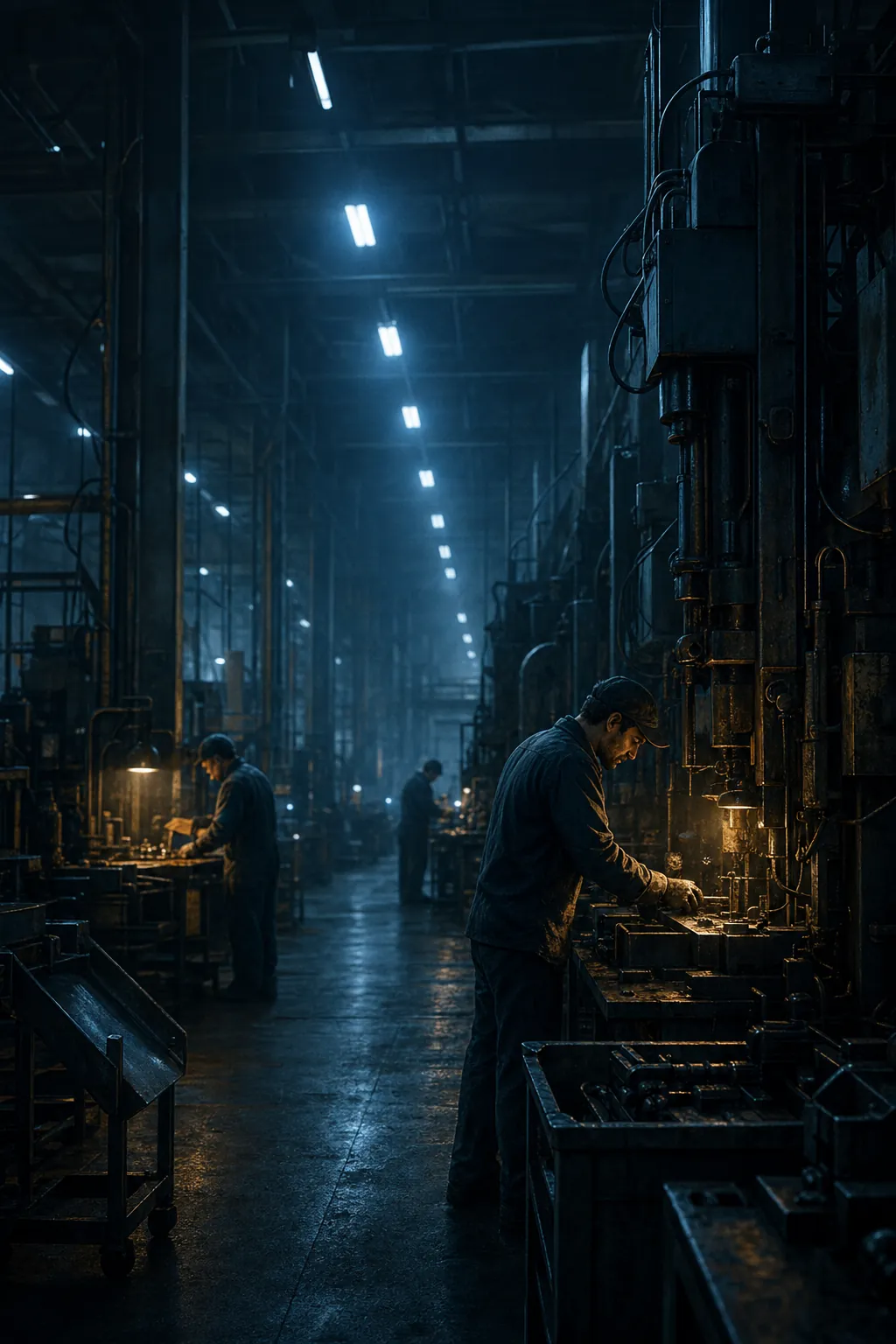
The factory floor smelled of coolant and aluminum, a smell that got into your clothes, your hair, the creases of your hands. It was 2 AM on a Thursday in March, and the night shift at Meridian Components was twelve hours old for the three men working Line 4. Marcus Webb was fifty-seven, a deacon at Mount Zion Baptist who hadn't missed a night shift in fourteen years. Danny Kowalski was forty-one, an atheist who read science fiction in the break room and argued with Marcus about everything except the job itself. And Eddie Voss was twenty-nine, new to the shift, new to the factory, new to the particular loneliness of being awake while the world slept.
Eddie had lost custody of his kids two months earlier. His ex-wife had documented everything—the drinking, the missed pickups, the night he left them in the car while he ran into a bar. The judge had been thorough. Eddie got supervised visitation on Saturdays, driving forty minutes to play board games with his own children while a social worker took notes. He hadn't told anyone at the factory. He hadn't told anyone about anything in months.
"You're running that too fast," Marcus said, not looking up. Eddie was feeding aluminum blanks into the CNC machine, a mindless rhythm that let him not think. "Machine'll jam."
"It's fine," Eddie said.
"It's not fine. Slow it down."
Eddie slowed it down. Danny watched from across the line, a half-smile on his face. He and Marcus had worked together eight years. They had a rhythm. Eddie was the variable they hadn't figured out.
At 4 AM, the machine jammed.
Eddie had been running it too fast, just as Marcus said. The blank caught in the mechanism, and the machine shut down with a grinding noise that made all three men flinch. Eddie stood there and kicked the housing with his steel-toed boot, a useless gesture that hurt his foot and accomplished nothing.
"Easy," Marcus said.
"Don't tell me easy." Eddie's voice cracked. "Don't tell me anything. I don't need your church crap."
Marcus nodded, like this was reasonable. "Fair enough. Danny, hand me that pry bar."
They worked in silence. Twenty minutes to clear the jam and reset the calibration. Eddie stood aside, arms crossed, hating them for not hating him. When they finished, Marcus wiped his hands and said, "You got kids?"
Eddie didn't answer.
"I got three," Marcus said, not pressing. "Grown now. I missed most of their growing up working this shift. Birthdays, recitals, everything. Thought I was doing it for them. Providing." He paused. "They don't remember the providing. They remember me not being there."
"What do you want, a medal?" Eddie said.
"I want you to slow down the machine. That's all."
They went back to work. At 5:30, the sky outside began to lighten, a gray promise that meant nothing to anyone who slept through it. Eddie's hands were steady now, the rhythm of the job taking over.
"You pray?" Danny asked Marcus. It was the first time Eddie had heard him ask about religion without sarcasm.
"Every day," Marcus said.
"Does it work?"
"It works the way a compass works. Doesn't get you there. Just tells you which way is north."
Danny considered this. Eddie pretended not to listen.
"What if there's no north?" Danny asked.
"Then you're in trouble. But you ain't. You just don't like where it points."
The shift ended at 6 AM. The men clocked out in the gray light, pulling on jackets against the March chill. Eddie sat in his rusted Camry and watched his breath fog the glass. Then he took out his phone and called his ex-wife. Voicemail, as he knew it would be. He left a message: "Tell the kids I'll be there Saturday. Early. Tell them I'm sorry about last time."
He started the car and pulled out. Marcus and Danny stood by Danny's truck, talking about nothing. The factory hummed behind them, already resetting for the day shift. The work was done. The work would continue. There was no glory in it, and no shame. It was simply what came next.
Discussion Questions: 1. Marcus describes prayer as a compass that "doesn't get you there, just tells you which way is north." How does this understanding of faith change how we view suffering and unanswered prayer? 2. The factory setting is deliberately ordinary. What does this story suggest about where God's presence might be found? 3. Eddie makes a single phone call at the end—nothing dramatic, just a promise to show up. How might small acts of faithfulness be more significant than dramatic conversions?