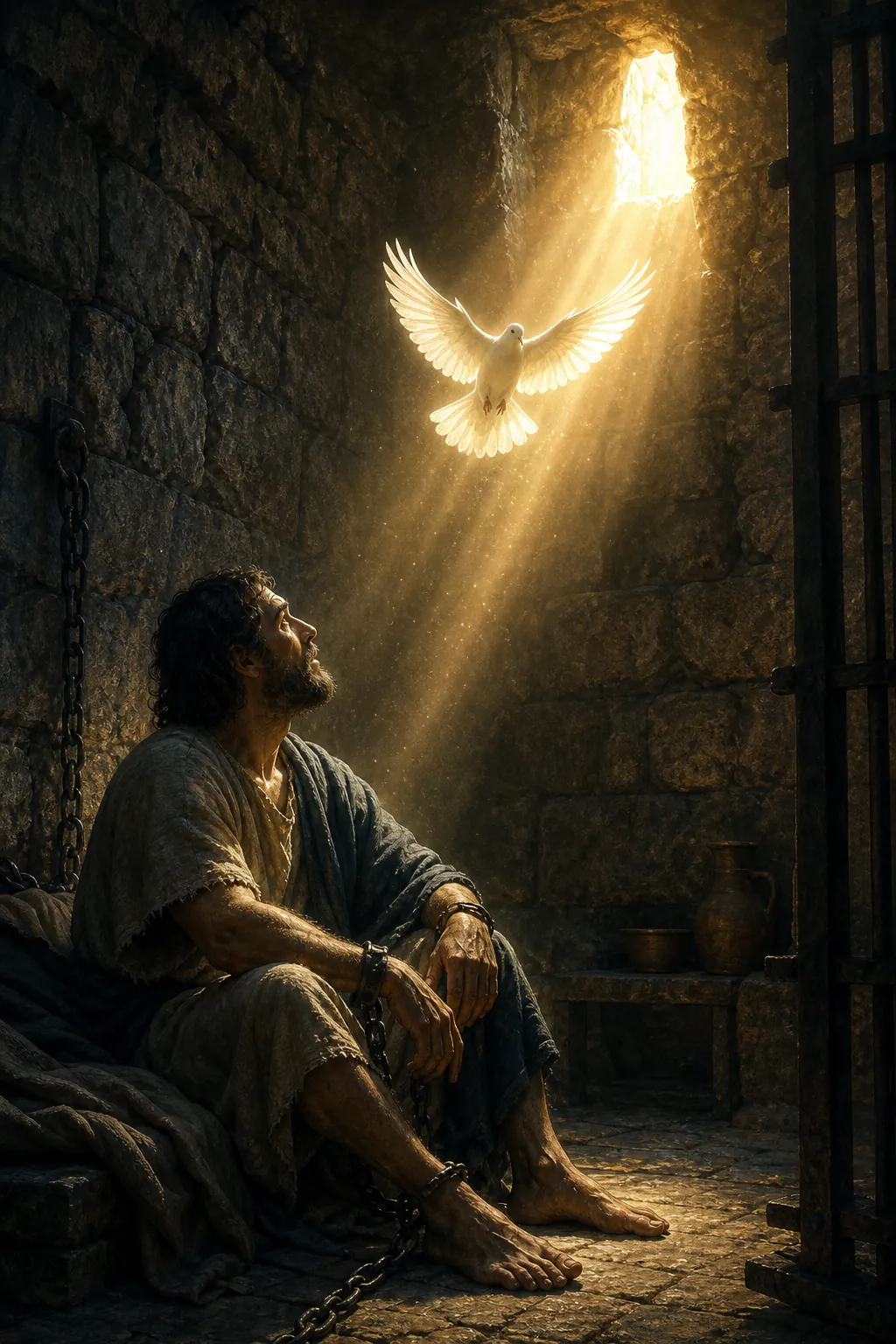
"The Peace of God: A Study of Philippians 4:4-9"
"Rejoice in the Lord alway: and again I say, Rejoice." — Philippians 4:4 (KJV)
"The Command to Rejoice"
Paul's command is striking not because it is difficult but because of where it comes from. He is in chains, awaiting trial, uncertain whether he will live or die. Yet he commands the Philippian church to rejoice. Not once, but twice: "Rejoice... and again I say, Rejoice." The repetition is not redundancy. It is emphasis. The Christian's joy is not a response to favorable circumstances; it is a fixed posture rooted in the Lord himself.
The phrase "in the Lord" is the key. Paul does not say rejoice in your health, your income, your reputation, or your comfort. He says rejoice in the Lord. Joy is not generated by changing circumstances but by an unchanging Person. If joy depended on the Philippians' situation, the command would be cruel. But because joy depends on Christ's finished work, the command is possible even in prison.
"The Cure for Anxiety"
The connection between verses 4 and 6 is not accidental. Rejoicing in the Lord prepares the heart for the command that follows: "Be careful for nothing." The word careful here means anxious, worried, divided in mind. Paul is not commanding carelessness or indifference to real problems. He is forbidding the kind of anxious fretting that assumes God is either unaware or unable.
The alternative to anxiety is not stoicism but prayer. "In every thing by prayer and supplication with thanksgiving let your requests be made known unto God." Thanksgiving is the surprising element. Most people pray when they are anxious, but few give thanks while they pray. Paul says thanksgiving is not an optional add-on; it is the shape of prayer that replaces anxiety. When we thank God for what he has already done, we are reminding ourselves of his faithfulness before we ask for what we still need.
"The Peace That Passes Understanding"
Verse 7 promises something remarkable: "the peace of God, which passeth all understanding, shall keep your hearts and minds through Christ Jesus." This peace is not the absence of trouble. It is not a calm environment or a resolved problem. It is a divine guard stationed around the heart and mind of the believer. The Greek word for keep is a military term meaning to garrison, to protect with a fortress. God's peace stands watch over the inner life, preventing anxiety from overrunning the soul.
The phrase "passeth all understanding" does not mean the peace is irrational. It means it surpasses human explanation. A believer can have peace in circumstances that should produce panic. An unbeliever cannot explain it, because the peace comes from a relationship with God that the unbeliever does not have. It is not positive thinking; it is the presence of the Prince of Peace.
"The Disciplined Mind"
Verses 8-9 add the practical dimension. "Whatsoever things are true, whatsoever things are honest, whatsoever things are just, whatsoever things are pure, whatsoever things are lovely, whatsoever things are of good report; if there be any virtue, and if there be any praise, think on these things." The mind is not a passive receiver. It is a garden that must be cultivated. Paul gives the Philippians a filter: refuse to let your mind dwell on what is false, dishonest, unjust, impure, or ugly. Instead, train your thoughts on what is excellent and praiseworthy.
This is not naive optimism. It is the discipline of a mind renewed by the Spirit. The believer lives in a fallen world, but he does not have to let the fallen world set the agenda for his thoughts. When the mind is saturated with truth, the peace that guards the heart has something solid to stand on.
"Application Questions"
1. Paul commands rejoicing "in the Lord" rather than in circumstances. What circumstances in your life right now make rejoicing feel impossible, and how does the object of your joy change the equation? 2. Thanksgiving is presented as the antidote to anxiety. What are three specific things you can thank God for today, even in the middle of your current requests? 3. Verse 8 gives a standard for what to think about. What kinds of media, conversations, or mental habits in your life fail this standard, and what would it look like to replace them with things that are true, pure, and praiseworthy?