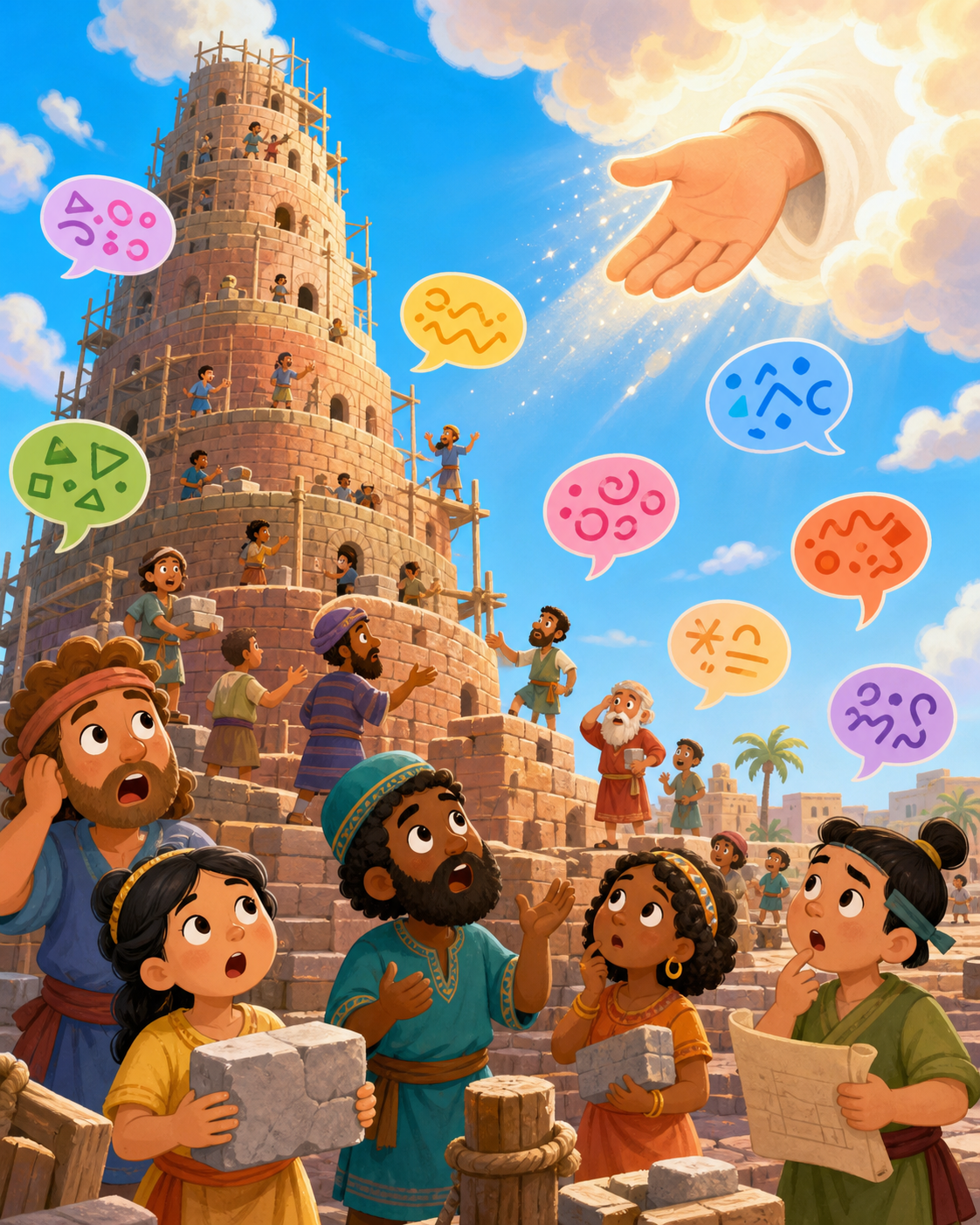
After the great flood, the whole world spoke one language. People traveled together across the plains until they found a wide valley. "Let us build a city here," they said. "And let us build a tower so high that its top reaches into the heavens. We will make a name for ourselves. We will not be scattered across the earth."
Among the builders was a boy named Abram. He watched the tower grow taller each day. Men baked bricks and spread tar to hold them together. The tower rose, level after level, until it looked like it might touch the clouds. The people were proud. They sang songs about their own strength. They told stories about how they would be like gods, living in the sky forever.
Abram felt a strange unease in his heart. Each night he looked up at the stars, and he wondered if the God who made those stars was happy about the tower. The people were not building it to worship God. They were building it to worship themselves. "We are strong," the leaders shouted. "We do not need anyone above us."
But God came down to see the city and the tower. He saw the pride in their hearts. He saw that if they kept going, they would only grow more foolish and more wicked. So the Lord did something only He could do. He confused their language. In one moment, a man asked for water, and the person beside him heard nonsense. A builder called for bricks, and his helper brought rope instead. No one could understand anyone else.
The work stopped. Arguments broke out. Families could not speak to one another. The people gave up and scattered across the earth, just as God had planned from the beginning. The tower stood half-built, crumbling in the wind, a silent reminder that human pride cannot reach heaven.
Abram walked away from the city with his father Terah. He did not understand everything yet, but he knew one thing for certain. People could not build their way to God. But God, in His kindness, would one day come down to people. And Abram would learn that God's way was not a tower of bricks, but a promise of grace.
What We Learn
The people at Babel thought they could reach heaven by their own works. They wanted to be important and powerful. But God is sovereign, which means His plans cannot be stopped or improved by human effort. He scattered the people because He knew their hearts were proud and sinful. Repentance means turning away from our own plans and admitting that God's way is better. We cannot earn God's favor by building towers or doing good deeds. The only way to be right with God is through Jesus, who came down to us because we could never climb up to Him.
Discussion Questions
1. Why did the people want to build the tower? 2. Was God being mean when He stopped them, or was He being wise and loving? 3. Why is it better to trust God's plan than to trust our own strength?
Bedtime Prayer
Dear God, forgive me when I think I know better than You. Help me to trust Your plan and not depend on my own strength. Thank You for loving me even when I am proud. Teach me to follow Your way instead of mine. In Jesus' name, Amen.