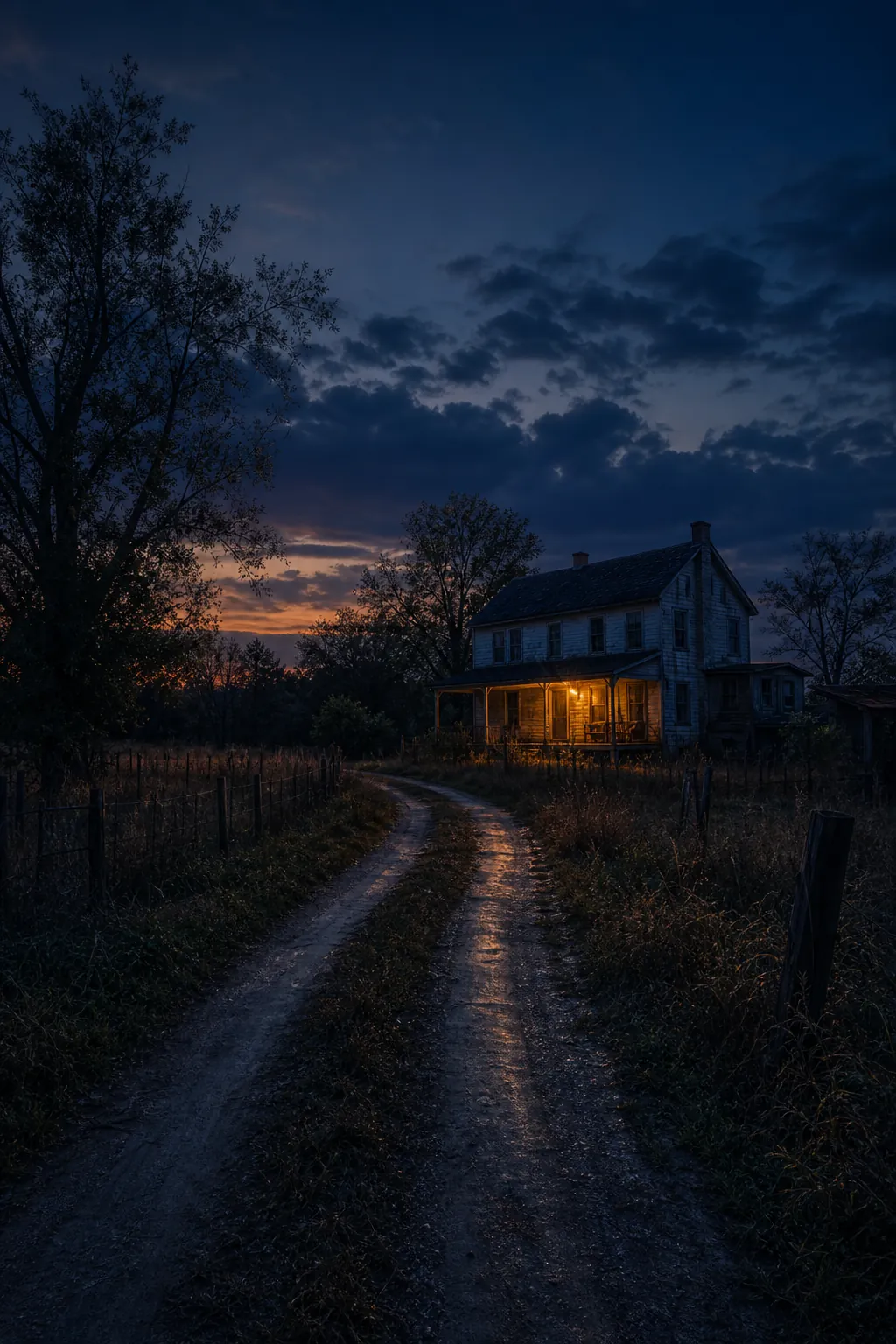
Henry Vance woke before the light did. At sixty-three, he didn't need an alarm; his body knew the hour. He lay in the dark beside the empty half of the bed—Doris had been gone six years, a stroke in the garden, quick as a door closing—and listened to the house settle. The porch light, he knew without looking, was still on. It had been on for ten years.
He rose, put on the coffee, and walked to the window. The light cast a yellow pool on the dirt drive, illuminating nothing. Henry had not heard from his son, Thomas, since a Christmas card in 1987, two years after Thomas left. The card had been postmarked Nashville and contained no message. Henry kept it in the drawer with the others.
Thomas had left at nineteen. There had been no fight, just a slow accumulation of silences that hardened into a wall. He had taken the truck Henry gave him, sold it in Knoxville, and disappeared into—what, exactly? Henry didn't know. Heard rumors. Heard nothing. Doris had prayed every night at the kitchen table until she stopped praying and started dying. Henry didn't blame Thomas for that. But he knew, in the way you know things without saying them, that the silence in the house had weighed on her. That she had died with one ear still turned toward the door.
Henry went about his morning. Fed the two remaining cows. Checked the fence line. The farm was barely forty acres now, whittled down by taxes and time, but it was enough for one old man. He ate his breakfast and washed the plate in the sink. He set out two plates. He had done this for ten years. Not hope, exactly. Habit, maybe. Or something deeper than hope, something that didn't require belief in an outcome.
The truck came up the drive in late afternoon. Henry was on the porch, shelling peas, and he didn't stand when he saw it. An old Ford Ranger, rust eating the wheel wells, belching smoke. It stopped twenty feet from the house, and the driver's door opened with a shriek of metal.
Thomas was thirty-three and looked older than Henry. He wore a denim jacket with a patch Henry didn't recognize, and his jaw worked a piece of gum with the furious energy of a man trying not to need something. He didn't look at the porch light. He didn't look at Henry, not directly.
"You're still here," Thomas said.
"I'm still here," Henry agreed.
Thomas walked past him into the house like he used to. Henry heard him in the kitchen, opening cabinets, closing them. When Henry came inside, Thomas was standing at the table, looking at the two plates.
"You knew I was coming?"
"I didn't know anything."
Thomas laughed, sharp. "Then you're an idiot."
"Maybe."
They sat down. Thomas ate like a man who hadn't eaten in days. Henry watched him. The man had his mother's eyes, the same dark brown that went soft when tired and hard when scared. They were hard now.
"I spent it all," Thomas said, not looking up. "The truck. The money I stole. Everything. Spent ten years being stupid, and the last two being angry about it."
"Okay," Henry said.
"Don't 'okay' me. I'm not here to apologize. I'm not here to make it right. I don't even know why I'm here."
"Okay," Henry said again.
Thomas's jaw tightened. He wanted a fight. Henry could see it, the way a thirsty man wants water. He wanted Henry to yell, to demand an accounting, to cast him out so he could confirm what he believed about himself—that he was worthless, that he had burned the bridge and deserved the ashes. Henry understood this the way he understood weather. It was simply true, and it changed nothing.
"The porch light," Thomas said, finally.
"What about it?"
"It's been on since I left."
"Yes."
"Why?"
Henry considered. The truth was too large for words, and too small to matter. He settled on: "I don't like the dark."
They ate in silence. The cicadas started their evening drone. Thomas finished his plate and sat there, his hands flat on the table like he didn't know what to do with them. Henry stood, picked up Thomas's plate, and refilled it from the skillet. Thomas watched him. His eyes were wet, but he wasn't crying. Something else. Something harder to look at.
"I'm not sorry," Thomas said.
"I know."
"I might never be sorry."
"I know that too."
Henry sat back down. He didn't reach across the table. He didn't say the words that would have made it easy. He just sat there, an old man in a failing body, and kept the light on.
Discussion Questions: 1. Henry never says "I forgive you," yet forgiveness is present in every action. How does this story redefine what forgiveness looks like in a broken family? 2. Thomas returns with resentment rather than repentance. What does this reveal about the nature of grace—does it require our cooperation, or does it work in spite of us? 3. The porch light stays on for ten years with no evidence it will ever be needed. What does this suggest about the God who keeps the light burning?